
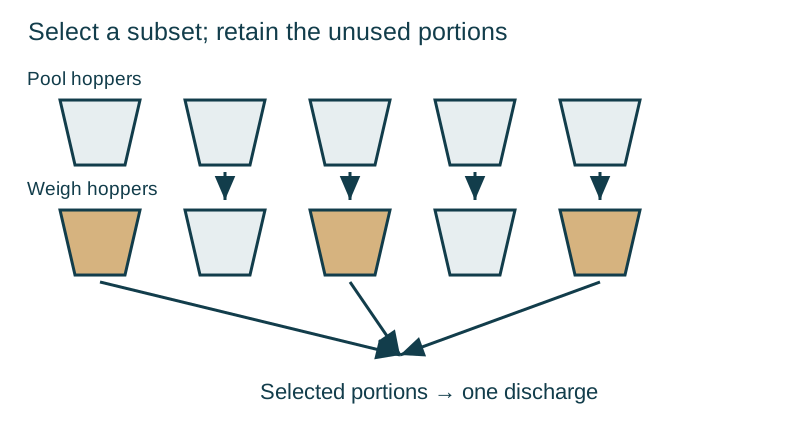
Combination Weigher Accuracy: 10-, 14- and 24-Head Layouts, Vibration and VFFS Timing
Connect head count and combination mathematics to feeder balance, fragile or sticky products, and complete discharge before the VFFS sealing jaws close.
From the force on a load cell to the package in the reject bin. Understand the mechanism, compare the options and plan the verification.
Find a technical guide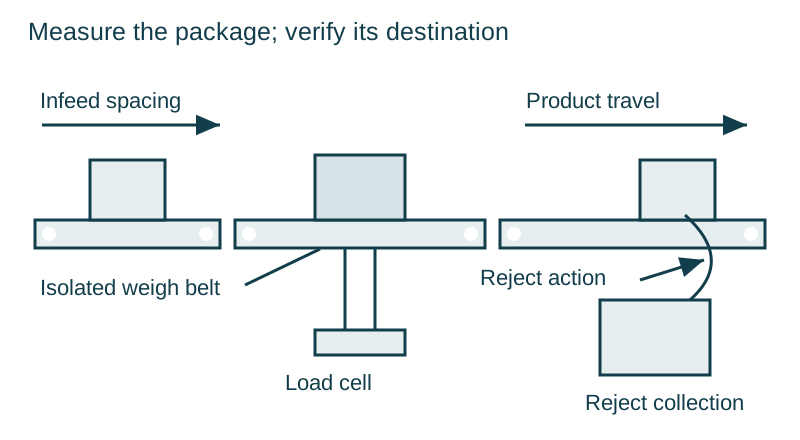
Choose the part of the process you need to understand.
Compare combination weighers, linear net-weight scales, auger fillers and loss-in-weight feeders through material flow, accuracy and line timing.
Connect dynamic weighing, air-jet or pusher rejection, vibration control and net-content verification.
Trace strain-gauge and force-restoration sensing through A/D conversion, signal conditioning and PLC communications.
Connect head count and combination mathematics to feeder balance, fragile or sticky products, and complete discharge before the VFFS sealing jaws close.
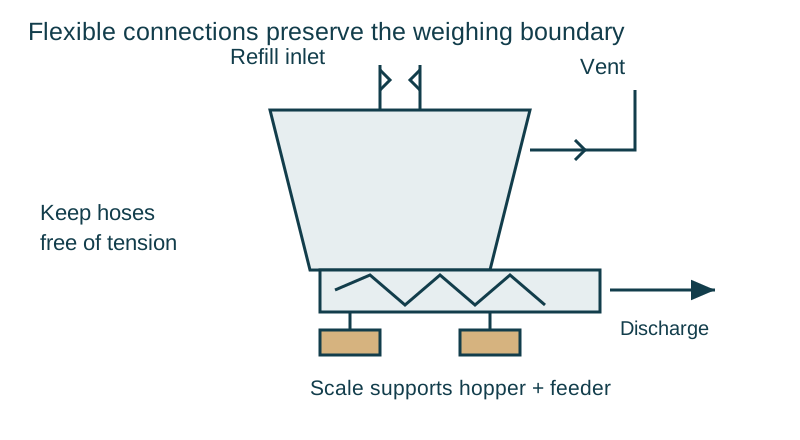
Trace mass-loss-rate control through normal feeding, automatic refill and recovery, then diagnose pressure, venting and flexible-connection forces.
Diagnose a multihead weigher by separating supply, unstable measurements and incomplete discharge, then verify the correction at the final package.
Specify a checkweigher around the package, the moving measurement, the reject mechanism and the records needed to verify each decision.
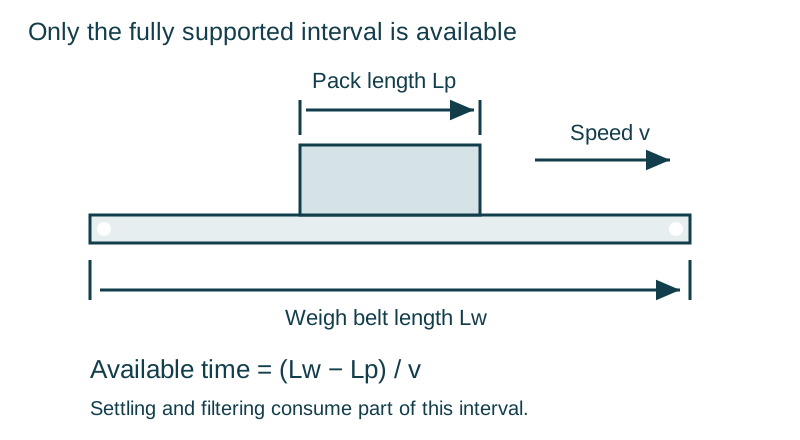
Size the weighing interval from belt and product geometry, separate static calibration from dynamic correction, and verify air-jet or pusher rejection.
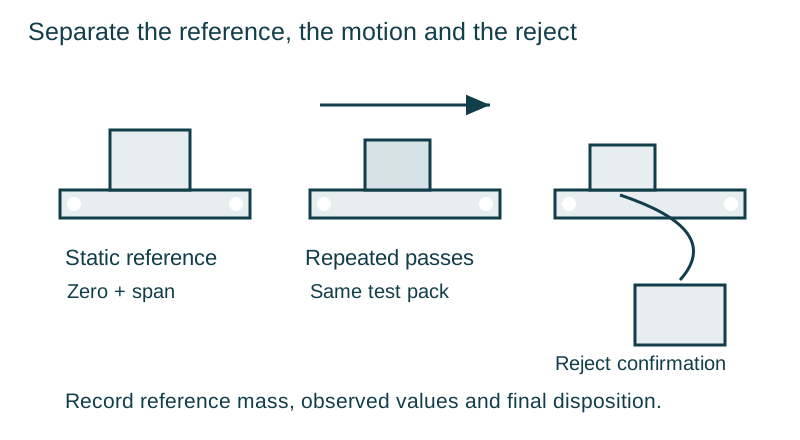
Keep calibration, adjustment and routine verification distinct, then link reference weights, repeated product passes and reject checks in one record.
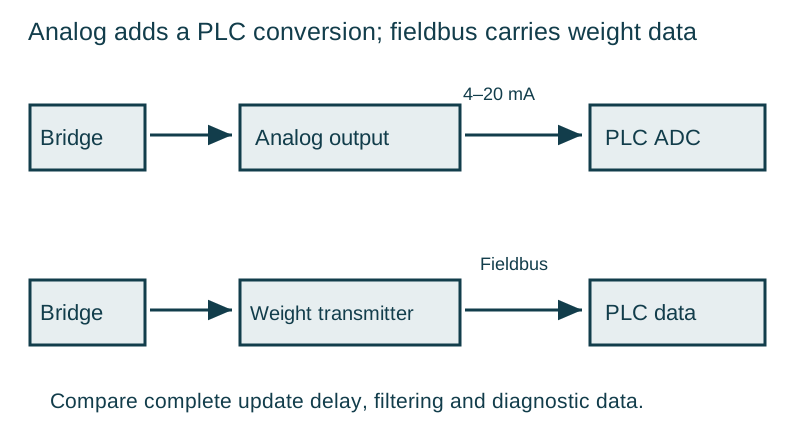
Compare analog and digital weighing interfaces using complete response delay, diagnostic access, interference control and coarse-to-fine filling behaviour.
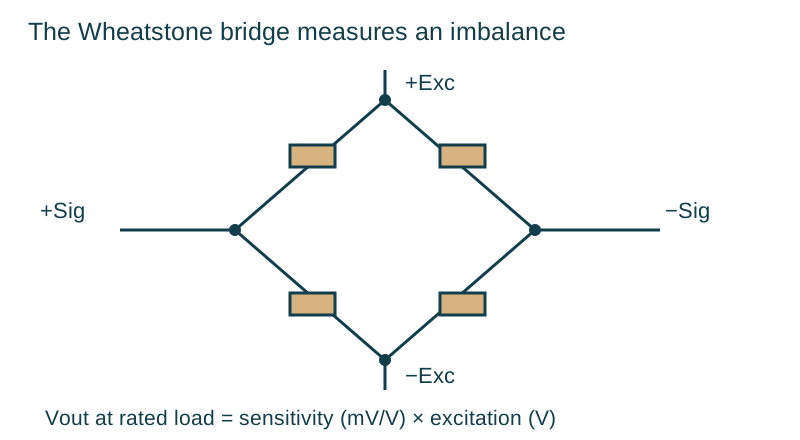
Calculate bridge output from excitation and rated sensitivity, trace four-wire and six-wire connections, and protect the load cell from mechanical overload.
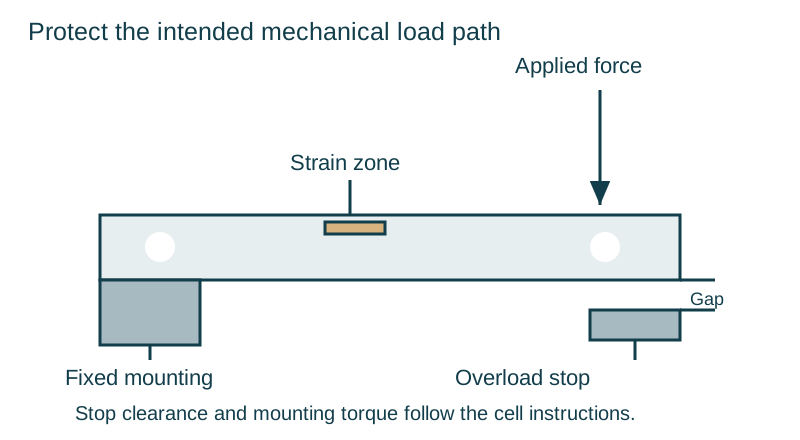
Understand the mechanical strain, bridge signal and installation conditions behind a packaging load cell, with a practical sequence for fault isolation.
Use technical diagrams, comparison tables and verification procedures to connect a supplier specification with the conditions on your line.
How the guides use technical sources →